Home › Afghanistan › Economy & Industry
Economy & Industry
Jobs, innovation and opportunity for a stable Afghanistan.
The economy shrank by a fifth when aid stopped in 2021. Growth has returned since 2023 with low inflation and a stable currency, but with millions of people returning from Iran and Pakistan, income per person is falling again.
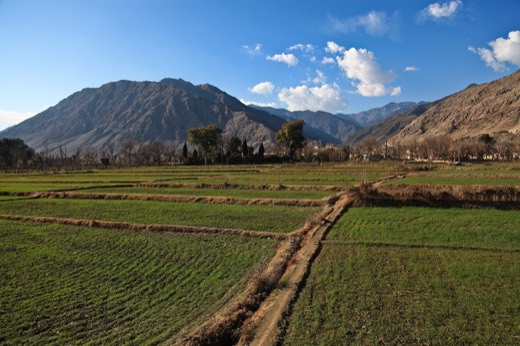
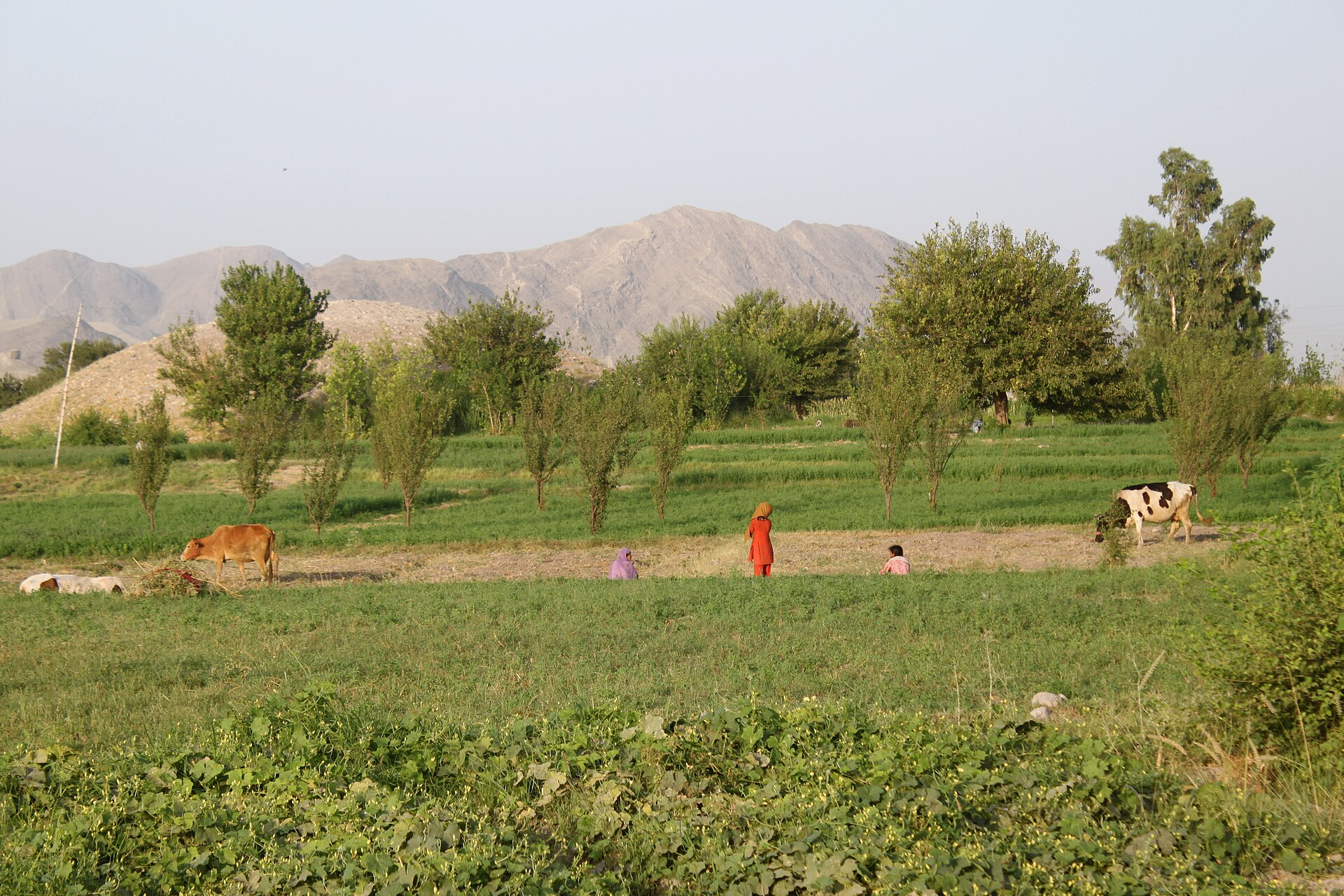
Photo: Todd Huffman, CC BY 2.0
Key Facts
- $467GDP per capita (US$)2025 estimate, down from a $688 peak in 2012
- −20.7%Real GDP in 2021Followed by −6.2% in 2022 (World Bank)
- 13.1% of GDPDomestic revenueFirst nine months of FY2025, up 15.1% on the year
- 232,000 → 10,200Opium cultivation (hectares)2022 to 2025 (UNODC)
GDP per capita (US$)
$467
2025 estimate, down from a $688 peak in 2012
Year-by-year macro data (World Bank)
| Year | Real GDP growth % | GDP per capita (US$, nominal) | Real GDP per capita growth % | AFN per US$ (avg) | Population growth % |
|---|---|---|---|---|---|
| 2016 | 2.3 | 522.1 | −0.3 | 67.5 | 2.6 |
| 2017 | 2.6 | 525.5 | −0.2 | 68.5 | 2.8 |
| 2018 | 1.2 | 491.3 | −1.7 | 73.5 | 3.0 |
| 2019 | 3.9 | 496.6 | 0.9 | 78.2 | 3.0 |
| 2020 | −2.4 | 510.8 | −5.4 | 76.9 | 3.2 |
| 2021 | −20.7 | 356.7 | −22.6 | 87.7 | 2.4 |
| 2022 | −6.2 | 357.4 | −7.6 | 88.5 | 1.4 |
| 2023 | 2.3 | 421.6 | 0.1 | 77.3 | 2.2 |
| 2024 | 2.5 | 484.3 | −0.4 | 70.3 | 2.9 |
| 2025e | 4.3 | 467.1 | −4.0 | 71.0 | 8.62 |
Conflict note: A later World Bank update, reported in 2026, revises 2024 growth to 1.9% and 2025 growth to 4.8%. It puts 2025 population growth at about 11% and the fall in per-capita GDP at 5.6%, with 4.0% growth projected for 2026.35 Earlier long-run context from the World Bank: growth averaged 9.4% in 2003–12, and GDP per capita rose from $186 in 2002 to $688 in 2012. Aid then equalled about 47% of GDP.36
GDP per capita (current US$)
- 2002
- 2012
- 2016
- 2019
- 2020
- 2021
- 2022
- 2023
- 2024
- 2025e
Key economic themes
- Aid dependence (Republic). The World Bank said in December 2019 that Afghanistan relied on grants to finance 75% of its total public expenditure, and it put grants at around 45% of GDP in 2020. That level was unsustainable, and it is why the 2021 aid cut-off triggered a 20.7% contraction. The Republic economy was also stagnating before the fall: real per-capita growth was negative in 2016–2018, and poverty was rising from about 38% (2007/08) to 54.5% (2016/17).
- Reserves and banking. About $9 billion of Da Afghanistan Bank reserves were frozen abroad in 2021. In 2022, $3.5 billion was transferred to the Swiss-based Afghan Fund, which hasn't disbursed to Kabul. The banking sector suffered liquidity limits and lost correspondent relationships. The World Bank (Nov 2025) says "cash dominance deepens as financial intermediation weakens". It notes that much liquidity circulates outside the formal banking system, which the internet blackout and the returnee inflow have reinforced.2
- Revenue: an area of real Taliban improvement. In the first nine months of FY2025, revenue totalled AFN 200.9bn ($3.0bn), or 13.1% of GDP, up 15.1% year-on-year. The budget deficit was only AFN 2.0bn (0.1% of GDP).37 Domestic tax revenue is projected at 17.1% of GDP in FY2025. The World Bank credits "stronger enforcement and enhanced compliance measures".2 Customs corruption that drained Republic revenue has fallen substantially, although the fiscal envelope is much smaller without grants.
- Inflation and currency. Afghanistan had deflation in 2023–24, and inflation was only 3.1% year-on-year in August 2025, among the lowest in the region.2 The afghani has strengthened from 88.5 (2022) to about 70–71 per dollar (2024–25). These are real achievements. They also reflect weak demand, UN cash shipments (about $40m per week at times), tight currency controls and a ban on foreign-currency transactions.
- Poverty and jobs. Poverty remains widespread. The World Bank says nearly one in four young Afghans is unemployed. Restrictions on women "continue to undermine human capital development".38
- Returnee shock. An estimated 4–4.7 million people returned between September 2023 and July 2025, up to 2.1 million of them in the first seven months of 2025 alone. The World Bank estimates returnees added 2.6 percentage points to GDP growth in FY2025 through consumption. But they pushed population growth to 8.6% and cut remittances by about 2% of GDP. The current-account deficit is projected to widen to nearly one-third of GDP.2
- Mining and infrastructure. The Taliban have awarded 183 mining contracts, 13 of them major, to domestic and foreign companies, many still at an early stage.2 The Qosh Tepa canal in the north, roughly 285 km and self-financed, is the flagship project. Downstream states, Uzbekistan and Turkmenistan, worry about its effect on Amu Darya water. Projects such as TAPI (the Turkmenistan–Afghanistan–Pakistan–India pipeline) and Trans-Afghan rail remain largely aspirational.
- Agriculture. Despite drought, 2025 brought a record irrigated wheat harvest of about 4.9 million MT, helped by FAO/World Bank seed programmes. Rainfed wheat collapsed to 85,000 MT, against a potential 706,000 MT.2
- Aid cuts in 2025. The US was the largest humanitarian donor in 2024, at $735.7m (47% of the plan's funding).39 After the January 2025 freeze, humanitarian funding for Afghanistan fell to $769m in 2025 from $1.73bn in 2024.40
Opium economy
| Year | Cultivation (ha) | Production (tonnes) | Note |
|---|---|---|---|
| 2001 | ~8,000 | ~185 | First Taliban ban |
| 2017 | ~328,000 | ~9,000 | Republic-era peak |
| 2022 | 232,000 | ~6,200 | Pre-ban crop |
| 2023 | ~10,800 | ~333 | Ban enforced (−95%) |
| 2024 | 12,800 | ~433 | |
| 2025 | 10,200 | 296 | Farmers' opium income $134m (vs $260m in 2024)41 |
The poppy ban is the Taliban's most dramatic policy success by the standards of international drug control, achieved where 20 years of Western counter-narcotics spending failed. But it removed a major rural income source. UNODC reports that methamphetamine production and trafficking keep rising, with seizures in and around Afghanistan about 50% more frequent by the end of 2024 than in the third quarter of 2023. It warns that falling prices and production might trigger attempts to cultivate opium in other countries. UNODC calls the gains "fragile".
AFM's Position
Afghanistan's future rests on inclusive and sustainable economic development: investment, jobs, and the transparent and responsible development of the country's natural resources.
Young Afghans must have access to education, employment and political participation. Investing in them is investing in the country's stability.
Research & References
Small numbers beside a figure link to its source. Figures from Taliban ministries are reported as claims and cannot be independently verified.