Home › Afghanistan › Women & Girls
Women & Girls
Rights, education and opportunity.
Under the 2004 Constitution women sat in parliament, served as judges, ministers and police, and ran businesses. Since 2021 more than 70 decrees have removed women from education, work, government and public space.
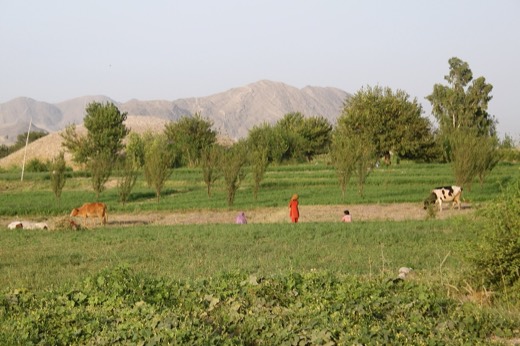
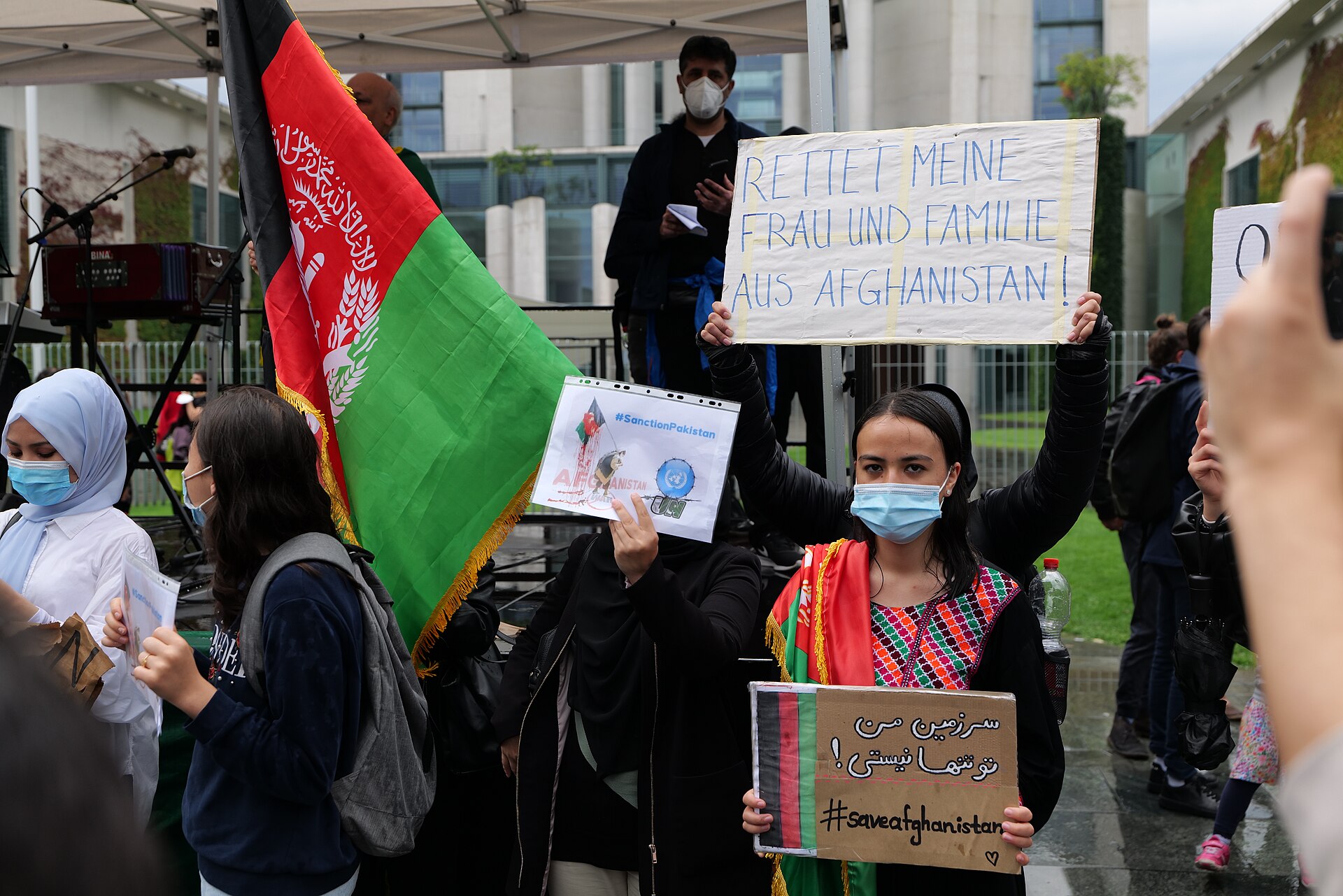
Photo: Leonhard Lenz, CC0
Key Facts
- 27% → 0Women in parliament68 of 250 seats under the Republic; parliament now abolished
- 24.2%Labour-force participationWomen, against 88.9% for men (UN Women, 2024)
- 78%Young women not in education, work or trainingAges 18–29; about four times the male rate
- 70+Decrees restricting women and girlsUNESCO count to August 2025
Women in parliament
27% → 0
68 of 250 seats under the Republic; parliament now abolished
Before/after institutions
| Area | Republic (2004–2021) | Taliban (2021–2026) |
|---|---|---|
| Constitution | 2004 Constitution, Art. 22: men and women have equal rights and duties | Constitution suspended; rule by decree of the Supreme Leader |
| Parliament | 27% quota in Wolesi Jirga (68/250 seats); women also in the Meshrano Jirga and provincial councils | Parliament abolished |
| Executive | Women ministers, deputy ministers, governors, ambassadors | No women in cabinet or local administration (UN Women)27 |
| Judiciary | Hundreds of women judges and prosecutors | Women judges dismissed; women barred from legal practice28 |
| Women-specific bodies | Ministry of Women's Affairs; EVAW law (2009); special EVAW prosecution units; AIHRC | Ministry abolished (Sept 2021); replaced by Vice & Virtue ministry;9 AIHRC dissolved |
| Security forces | Several thousand women police and soldiers | Effectively ended |
Timeline of key Taliban edicts restricting women and girls
UNESCO counts more than 70 decrees violating women's and girls' rights by August 2025.22
| Date | Restriction |
|---|---|
| Sept 2021 | Ministry of Women's Affairs abolished; female civil servants told to stay home (except some health/education roles) |
| Dec 2021 | Women may not travel >72 km without a male guardian (mahram) |
| Mar 2022 | Secondary schools for girls stay shut; gender-segregated park days9 |
| May 2022 | Mandatory full face covering in public; women TV presenters ordered to cover faces |
| Nov 2022 | Bans on women in parks, gyms, public baths |
| Dec 2022 | University ban (20 Dec); NGO work ban (24 Dec) |
| Apr 2023 | Ban extended to Afghan women working for the UN |
| July 2023 | Beauty salons closed (tens of thousands of women-run businesses affected) |
| Aug 2024 | Vice & Virtue law: women's voices not to be heard outside home; full body/face covering; restrictions on looking at unrelated men |
| Dec 2024 | Ban on women in medical, nursing and midwifery institutes; reported ban on windows overlooking women's spaces |
| Sept 2025 | Books by women removed from universities; women blocked from entering UN premises nationwide9 |
Labour, finance, wellbeing
| Metric | Value | Source |
|---|---|---|
| Female labour-force participation | 24.2% (vs 88.9% men)1 | UN Women Afghanistan Gender Index 2024 (June 2025) |
| Young women (18–29) not in education, employment or training (NEET) | 78% — ~4x the male rate1 | UN Women 2024 |
| Women with bank account/mobile money | 6.8% (vs 20.1% men)1 | UN Women 2024 |
| Gender gap (index) | 76% disparity; 2nd-worst of 114 countries (above Yemen only)129 | UN Women 2024 |
| Women realise share of potential | 17%30 | UN Women 2024 |
| Women's employment change | −25% in the 18 months to end-2022 (men −7%)3031 | UN agencies via UN Women |
| Unpaid domestic work | 74% of women vs 3% of men27 | UN Women 2024 |
There is a paradox here. UN Women finds the number of employed women has doubled and unemployed women seeking work has quadrupled since the takeover.1 This is economic desperation, not liberalisation: the work is mostly informal and home-based.
Child marriage, violence and mental health. UNICEF warns that girls denied education face higher risks of child marriage.26 The UN cites estimates that the education ban raises maternal-mortality risk by at least 50%.32 With EVAW courts, shelters and specialised prosecutors gone, survivors of gender-based violence have almost no formal recourse. UN reporting, including the Special Rapporteur Richard Bennett's reports, documents rising depression, anxiety and suicidal ideation among women. Reliable national suicide statistics don't exist under either regime, so trends can't be quantified credibly.
Legal characterisation.
- UN experts and the Special Rapporteur describe the system as "gender persecution" and an "institutionalised system of gender discrimination".33 They are pressing to codify "gender apartheid" in international law.
- On 8 July 2025, ICC Pre-Trial Chamber II issued arrest warrants for Supreme Leader Haibatullah Akhundzada and Chief Justice Abdul Hakim Haqqani for the crime against humanity of persecution on gender grounds. This was the first time the court issued warrants built on that charge. The Taliban reject the court.34
- Germany, Australia, Canada and the Netherlands have initiated proceedings against the Taliban under the UN Convention on the Elimination of All Forms of Discrimination Against Women (CEDAW).
AFM's Position
Women and girls must regain access to secondary and higher education, employment and public life, with meaningful representation in political institutions.
The dignity and safety of every person come first.
Research & References
Small numbers beside a figure link to its source. Figures from Taliban ministries are reported as claims and cannot be independently verified.