Home › Knowledge Center › The State of Afghanistan 2026
The State of Afghanistan 2026
What was built. What was lost. What must come next.
Afghanistan's 20 years under the Islamic Republic brought large but fragile and heavily aid-funded gains in schooling, health, media and women's public life. In five years of Taliban rule since August 2021, the gains in rights, education, media and political participation have mostly been reversed. A few indicators have stabilised or improved: battlefield violence, opium cultivation, inflation, the exchange rate and domestic revenue collection. Living standards per person, however, have not recovered.
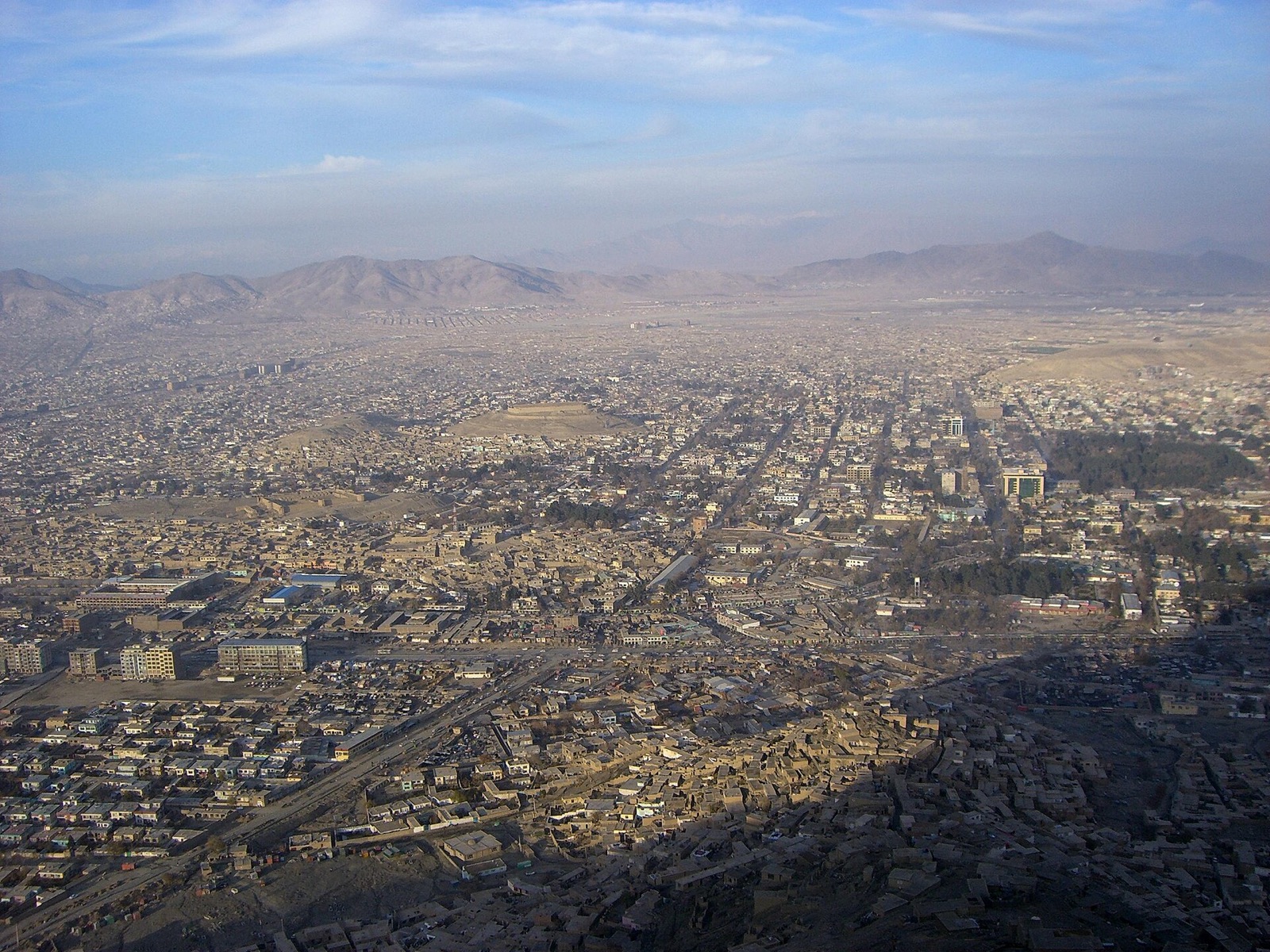
Photo: Sven Dirks, CC BY-SA 3.0

Summary
- The losses are real and well measured. Girls' enrollment went from almost nobody in 2001 to more than 80% of primary-age girls and, according to UNESCO, nearly 1 million in secondary school by 2021. Today Afghanistan is the only country in the world that bans girls from secondary school and women from university, and 2.4 million girls are excluded (UNESCO, August 2026), up 200,000 in a year and possibly approaching 4 million by 2030. The media sector lost most of its journalists, and the press freedom rank fell from 122nd to 175th of 180. Women's labour force participation is 24% against 89% for men. The UN and the ICC now describe Taliban policy in terms of "gender apartheid" and gender persecution.
- The economy contracted, then stabilised at a lower level. Real GDP fell 20.7% in 2021 and 6.2% in 2022, and GDP per capita dropped from about $511 (2020) to $357 (2021–22). Growth has resumed since 2023, with low inflation and a strong afghani. But more than 6 million Afghans have returned from Iran and Pakistan since September 2023 (UNHCR, June 2026), and aid collapsed in 2025, so income per person is falling again. The IPC projected 17.4 million people (36% of the population) in crisis-level hunger (Phase 3 or worse) for November 2025–March 2026, including 4.7 million in Phase 4 (emergency).
- What improved, honestly stated. UNAMA counted more than 8,000–11,000 civilian casualties a year from 2010 to 2020. After the war ended in 2021 the figure fell to a few hundred to a few thousand per year, though Pakistani cross-border strikes since October 2025 are reversing this. Opium cultivation fell from 232,000 ha (2022) to 10,200 ha (2025), according to UNODC's Afghanistan Opium Survey 2025. Revenue collection and currency stability are better than under the Republic. The Republic itself was deeply corrupt and riddled with election fraud, and grants financed 75% of its public spending (World Bank, 2019). Poverty was already rising before 2021.
Key indicators
| Indicator | ~2001 (1st Taliban era) | Republic peak/late (2019–2021) | Taliban era latest (2024–2026) | Direction |
|---|---|---|---|---|
| Girls in school | "Virtually none" (UNESCO); ~3% of girls in some primary education | >80% of primary-age girls enrolled; ~1 million girls in secondary (2021) | Secondary & university banned; 2.4 million girls excluded (UNESCO, Aug 2026) | ⬇⬇ Collapse |
| Total school enrollment | ~1 million | ~10 million (2018); primary 6.8m (2019) | Primary 5.7m (2022) | ⬇ |
| Women in higher education | ~5,000 | >100,000 (2021) | 0 (ban since Dec 2022) | ⬇⬇ |
| Women in parliament | None (no parliament) | 27% constitutional quota (68 of 250 Wolesi Jirga seats) | 0 — parliament abolished; no women in cabinet | ⬇⬇ |
| Female labour-force participation | Very low (work largely banned) | Rising; women ~a fifth+ of civil service | 24.2% vs 88.9% men (UN Women 2024 Index)1 | ⬇ |
| GDP per capita (current US$) | ~$186 (2002) | $510.8 (2020) | $357 (2022) → $484 (2024) → $467 (2025e) | ⬇ then partial recovery |
| Real GDP growth | — | 9.4% avg 2003–12; 3.9% (2019) | −20.7% (2021), −6.2% (2022), +2.3% (2023), +2.5% (2024), +4.3% (2025p)2 | ⬇ then ↗ |
| Maternal mortality (per 100,000 live births) | ~1,450 (2000) | 638 (2017); 620 (2020, WHO) | No independent national survey; Taliban MoPH cites ~638 | ↗ then stalled/at risk |
| Civilian casualties (UNAMA) | — | 10,401 (2019); 8,820 (2020); 5,183 in H1 2021 alone | 108 in Q1 2025; spike from Pakistan strikes since Oct 2025 | ⬇⬇ (improvement) |
| Opium cultivation | ~8,000 ha (2001 Taliban ban year) | 177,000–232,000 ha range (2021–22) | 10,200 ha (2025) | ⬇⬇ (improvement in narcotics terms) |
| Press freedom rank (RSF) | Near bottom | 122nd (2021) | 175th of 180 (2026) | ⬇⬇ |
| Corruption Perceptions Index (TI) | Not ranked | Rank 165, score 19 (2020) | Rank 169 of 182, score 16 (2025) | ≈ / slight ⬇ |
| People in humanitarian need | — | ~18.4m (2021 HRP) | 23.7m (2024), 22.9m (2025),34 ~22m (2026) | ⬆ |
| Acute food insecurity (IPC 3+) | — | 22.8m peak (late 2021) | 17.4m (Nov 2025–Mar 2026) | ⬆ from Republic norm; below 2021 peak |
| International recognition | 3 states (Pakistan, Saudi, UAE)5 | UN-seated, widely recognised | Recognised only by Russia (July 2025);6 UN seat held by Republic-era envoy | ⬇ |
Data-quality note: Taliban-era figures depend heavily on UN agency estimates, the World Bank's surveys, and data from Taliban ministries that can't be independently verified. Data from National Statistics and Information Authority (NSIA) after 2021 is used by the World Bank but has not been independently audited. Where figures conflict, both are shown.
Education
Before/after
| Metric | 2001 | 2018–2021 (Republic) | 2022–2026 (Taliban) |
|---|---|---|---|
| Total enrollment | ~1 million | ~10 million (2018) | Primary down to 5.7m (2022) from 6.8m (2019) |
| Girls' primary enrollment | ~3% of girls received any primary education | >80% of primary-age girls enrolled; 2.5m girls in primary (2018) | Allowed up to grade 6; 1.1 million fewer children (boys and girls) in primary school by 2024 |
| Girls in secondary | ~0 | ~1 million (2021) | Banned since 23 March 2022 |
| Girls barred from secondary (cumulative) | — | — | 1.4m (Aug 2024) → 2.2m (2025) → 2.4m (Aug 2026) |
| Women in university | ~5,000 | >100,000 | 0 (banned 20 Dec 2022) |
| Women in medical/nursing/midwifery institutes | — | Thousands enrolled | Banned Dec 2024 |
| Share of school-age girls out of school | Nearly all | Substantial; 3.5m children out of school pre-collapse, ~85% girls according to some estimates | ~80% of school-age girls and young women (UNESCO, 2024) |
Chart — Girls excluded from secondary education (UNESCO/UNICEF counts)
- Aug 2024
- 2025
- Aug 2026
- 2030 proj
Key points
- Scale of the Republic gain. UNESCO says the number of students rose tenfold between 2001 and 2021. Female higher-education enrollment rose from about 5,000 to more than 100,000.2223 The gains were real, but there were caveats. Before the collapse, 3.5 million children were still out of school.24 Quality was weak, and a SIGAR audit raised concerns about "ghost schools" and inflated enrollment data. Rural girls, especially in the insecure south, lagged far behind.
- What the Taliban changed. Girls past grade 6 are banned (March 2022). Women are banned from university (December 2022) and from medical institutes (December 2024). Women may not teach boys.21 In September 2025, books written by women were removed from university teaching.18 UNESCO projects a shortfall of more than 11,000 qualified female teachers by 2030.21 It also estimates that the higher-education ban alone will cost up to US$9.6 billion in lost potential by 2066, roughly two-thirds of current GDP.25
- Madrassas and curriculum. The Taliban have prioritised religious schooling. They are expanding a network of state-run madrassas, revising curricula toward religious subjects, and removing subjects such as civic education and arts. Independent counts of the madrassa expansion aren't available. Treat the Taliban's claims of thousands of new madrassas as unverified.
- Partial mitigation. UNICEF reached 445,000 children through community-based education (64% girls).26 UNESCO-trained facilitators teach literacy to 57,000 young people in more than 2,600 villages. These programmes are under constant pressure from the authorities.22
- Boys are also affected. Overall primary enrollment fell, quality declined after experienced female teachers were removed, and poverty pushes boys into child labour.
Women's Rights
Before/after institutions
| Area | Republic (2004–2021) | Taliban (2021–2026) |
|---|---|---|
| Constitution | 2004 Constitution, Art. 22: men and women have equal rights and duties | Constitution suspended; rule by decree of the Supreme Leader |
| Parliament | 27% quota in Wolesi Jirga (68/250 seats); women also in the Meshrano Jirga and provincial councils | Parliament abolished |
| Executive | Women ministers, deputy ministers, governors, ambassadors | No women in cabinet or local administration (UN Women)27 |
| Judiciary | Hundreds of women judges and prosecutors | Women judges dismissed; women barred from legal practice28 |
| Women-specific bodies | Ministry of Women's Affairs; EVAW law (2009); special EVAW prosecution units; AIHRC | Ministry abolished (Sept 2021); replaced by Vice & Virtue ministry;9 AIHRC dissolved |
| Security forces | Several thousand women police and soldiers | Effectively ended |
Timeline of key Taliban edicts restricting women and girls
UNESCO counts more than 70 decrees violating women's and girls' rights by August 2025.22
| Date | Restriction |
|---|---|
| Sept 2021 | Ministry of Women's Affairs abolished; female civil servants told to stay home (except some health/education roles) |
| Dec 2021 | Women may not travel >72 km without a male guardian (mahram) |
| Mar 2022 | Secondary schools for girls stay shut; gender-segregated park days9 |
| May 2022 | Mandatory full face covering in public; women TV presenters ordered to cover faces |
| Nov 2022 | Bans on women in parks, gyms, public baths |
| Dec 2022 | University ban (20 Dec); NGO work ban (24 Dec) |
| Apr 2023 | Ban extended to Afghan women working for the UN |
| July 2023 | Beauty salons closed (tens of thousands of women-run businesses affected) |
| Aug 2024 | Vice & Virtue law: women's voices not to be heard outside home; full body/face covering; restrictions on looking at unrelated men |
| Dec 2024 | Ban on women in medical, nursing and midwifery institutes; reported ban on windows overlooking women's spaces |
| Sept 2025 | Books by women removed from universities; women blocked from entering UN premises nationwide9 |
Labour, finance, wellbeing
| Metric | Value | Source |
|---|---|---|
| Female labour-force participation | 24.2% (vs 88.9% men)1 | UN Women Afghanistan Gender Index 2024 (June 2025) |
| Young women (18–29) not in education, employment or training (NEET) | 78% — ~4x the male rate1 | UN Women 2024 |
| Women with bank account/mobile money | 6.8% (vs 20.1% men)1 | UN Women 2024 |
| Gender gap (index) | 76% disparity; 2nd-worst of 114 countries (above Yemen only)129 | UN Women 2024 |
| Women realise share of potential | 17%30 | UN Women 2024 |
| Women's employment change | −25% in the 18 months to end-2022 (men −7%)3031 | UN agencies via UN Women |
| Unpaid domestic work | 74% of women vs 3% of men27 | UN Women 2024 |
There is a paradox here. UN Women finds the number of employed women has doubled and unemployed women seeking work has quadrupled since the takeover.1 This is economic desperation, not liberalisation: the work is mostly informal and home-based.
Child marriage, violence and mental health. UNICEF warns that girls denied education face higher risks of child marriage.26 The UN cites estimates that the education ban raises maternal-mortality risk by at least 50%.32 With EVAW courts, shelters and specialised prosecutors gone, survivors of gender-based violence have almost no formal recourse. UN reporting, including the Special Rapporteur Richard Bennett's reports, documents rising depression, anxiety and suicidal ideation among women. Reliable national suicide statistics don't exist under either regime, so trends can't be quantified credibly.
Legal characterisation.
- UN experts and the Special Rapporteur describe the system as "gender persecution" and an "institutionalised system of gender discrimination".33 They are pressing to codify "gender apartheid" in international law.
- On 8 July 2025, ICC Pre-Trial Chamber II issued arrest warrants for Supreme Leader Haibatullah Akhundzada and Chief Justice Abdul Hakim Haqqani for the crime against humanity of persecution on gender grounds. This was the first time the court issued warrants built on that charge. The Taliban reject the court.34
- Germany, Australia, Canada and the Netherlands have initiated proceedings against the Taliban under the UN Convention on the Elimination of All Forms of Discrimination Against Women (CEDAW).
Economy
Year-by-year macro data (World Bank)
| Year | Real GDP growth % | GDP per capita (US$, nominal) | Real GDP per capita growth % | AFN per US$ (avg) | Population growth % |
|---|---|---|---|---|---|
| 2016 | 2.3 | 522.1 | −0.3 | 67.5 | 2.6 |
| 2017 | 2.6 | 525.5 | −0.2 | 68.5 | 2.8 |
| 2018 | 1.2 | 491.3 | −1.7 | 73.5 | 3.0 |
| 2019 | 3.9 | 496.6 | 0.9 | 78.2 | 3.0 |
| 2020 | −2.4 | 510.8 | −5.4 | 76.9 | 3.2 |
| 2021 | −20.7 | 356.7 | −22.6 | 87.7 | 2.4 |
| 2022 | −6.2 | 357.4 | −7.6 | 88.5 | 1.4 |
| 2023 | 2.3 | 421.6 | 0.1 | 77.3 | 2.2 |
| 2024 | 2.5 | 484.3 | −0.4 | 70.3 | 2.9 |
| 2025e | 4.3 | 467.1 | −4.0 | 71.0 | 8.62 |
Conflict note: A later World Bank update, reported in 2026, revises 2024 growth to 1.9% and 2025 growth to 4.8%. It puts 2025 population growth at about 11% and the fall in per-capita GDP at 5.6%, with 4.0% growth projected for 2026.35 Earlier long-run context from the World Bank: growth averaged 9.4% in 2003–12, and GDP per capita rose from $186 in 2002 to $688 in 2012. Aid then equalled about 47% of GDP.36
Chart — GDP per capita (current US$)
- 2002
- 2012
- 2016
- 2019
- 2020
- 2021
- 2022
- 2023
- 2024
- 2025e
Key economic themes
- Aid dependence (Republic). The World Bank said in December 2019 that Afghanistan relied on grants to finance 75% of its total public expenditure, and it put grants at around 45% of GDP in 2020. That level was unsustainable, and it is why the 2021 aid cut-off triggered a 20.7% contraction. The Republic economy was also stagnating before the fall: real per-capita growth was negative in 2016–2018, and poverty was rising from about 38% (2007/08) to 54.5% (2016/17).
- Reserves and banking. About $9 billion of Da Afghanistan Bank reserves were frozen abroad in 2021. In 2022, $3.5 billion was transferred to the Swiss-based Afghan Fund, which hasn't disbursed to Kabul. The banking sector suffered liquidity limits and lost correspondent relationships. The World Bank (Nov 2025) says "cash dominance deepens as financial intermediation weakens". It notes that much liquidity circulates outside the formal banking system, which the internet blackout and the returnee inflow have reinforced.2
- Revenue: an area of real Taliban improvement. In the first nine months of FY2025, revenue totalled AFN 200.9bn ($3.0bn), or 13.1% of GDP, up 15.1% year-on-year. The budget deficit was only AFN 2.0bn (0.1% of GDP).37 Domestic tax revenue is projected at 17.1% of GDP in FY2025. The World Bank credits "stronger enforcement and enhanced compliance measures".2 Customs corruption that drained Republic revenue has fallen substantially, although the fiscal envelope is much smaller without grants.
- Inflation and currency. Afghanistan had deflation in 2023–24, and inflation was only 3.1% year-on-year in August 2025, among the lowest in the region.2 The afghani has strengthened from 88.5 (2022) to about 70–71 per dollar (2024–25). These are real achievements. They also reflect weak demand, UN cash shipments (about $40m per week at times), tight currency controls and a ban on foreign-currency transactions.
- Poverty and jobs. Poverty remains widespread. The World Bank says nearly one in four young Afghans is unemployed. Restrictions on women "continue to undermine human capital development".38
- Returnee shock. An estimated 4–4.7 million people returned between September 2023 and July 2025, up to 2.1 million of them in the first seven months of 2025 alone. The World Bank estimates returnees added 2.6 percentage points to GDP growth in FY2025 through consumption. But they pushed population growth to 8.6% and cut remittances by about 2% of GDP. The current-account deficit is projected to widen to nearly one-third of GDP.2
- Mining and infrastructure. The Taliban have awarded 183 mining contracts, 13 of them major, to domestic and foreign companies, many still at an early stage.2 The Qosh Tepa canal in the north, roughly 285 km and self-financed, is the flagship project. Downstream states, Uzbekistan and Turkmenistan, worry about its effect on Amu Darya water. Projects such as TAPI (the Turkmenistan–Afghanistan–Pakistan–India pipeline) and Trans-Afghan rail remain largely aspirational.
- Agriculture. Despite drought, 2025 brought a record irrigated wheat harvest of about 4.9 million MT, helped by FAO/World Bank seed programmes. Rainfed wheat collapsed to 85,000 MT, against a potential 706,000 MT.2
- Aid cuts in 2025. The US was the largest humanitarian donor in 2024, at $735.7m (47% of the plan's funding).39 After the January 2025 freeze, humanitarian funding for Afghanistan fell to $769m in 2025 from $1.73bn in 2024.40
Opium economy
| Year | Cultivation (ha) | Production (tonnes) | Note |
|---|---|---|---|
| 2001 | ~8,000 | ~185 | First Taliban ban |
| 2017 | ~328,000 | ~9,000 | Republic-era peak |
| 2022 | 232,000 | ~6,200 | Pre-ban crop |
| 2023 | ~10,800 | ~333 | Ban enforced (−95%) |
| 2024 | 12,800 | ~433 | |
| 2025 | 10,200 | 296 | Farmers' opium income $134m (vs $260m in 2024)41 |
The poppy ban is the Taliban's most dramatic policy success by the standards of international drug control, achieved where 20 years of Western counter-narcotics spending failed. But it removed a major rural income source. UNODC reports that methamphetamine production and trafficking keep rising, with seizures in and around Afghanistan about 50% more frequent by the end of 2024 than in the third quarter of 2023. It warns that falling prices and production might trigger attempts to cultivate opium in other countries. UNODC calls the gains "fragile".
Commerce, Trade, Telecom and Finance
| Area | Republic | Taliban era |
|---|---|---|
| Exports | ~$0.8–0.9bn goods (2019–20), dominated by fruit, nuts, carpets, coal | Rose in 2022 (+43% G&S nominal) on coal and agricultural exports to Pakistan; flatter since; Pakistan border closures (Oct 2025 onward) a major disruption |
| Imports | ~$6–7bn, financed by aid inflows | Collapsed −30% (2021); rebounded +34% (2022), +14% (2023), +19% (2024); widening trade deficit |
| Main partners | Pakistan, India, Iran, China, UAE, Uzbekistan | Pakistan (disrupted), Iran, Central Asia, China, Russia; India via Chabahar/air corridor reduced |
| Women-owned businesses | Growing, supported by donor programmes | Severely constrained: salon closures, mahram rules, NGO bans; women's enterprises mostly home-based |
| Finance | Formal banking growing but shallow | Cash dominance deepening; women's account ownership 6.8%1 |
| Telecom/internet | Rapid mobile growth; 9,350 km fibre network largely built in Republic era | Fibre bans by province from 16 Sept 2025; first nationwide 48-hour blackout 29 Sept–1 Oct 2025 (<1% normal connectivity per NetBlocks); social media restrictions afterward; reports in May 2026 of orders to cut residential fibre in Kabul (single-source, unconfirmed) |
| Shutdown cost | — | World Bank: ~US$2m output lost per 24 hours ($3–4m for the 36–48-hour blackout), likely an underestimate2 |
Health
Before/after
| Indicator | ~2000–2003 | Republic (2017–2021) | Taliban era (2022–2026) |
|---|---|---|---|
| Maternal mortality (per 100,000) | ~1,450 (2000); 1,240 (2003) | 638 (2017); 620 (2020, WHO) | No independent national survey since 2020; Taliban MoPH claims ~638 |
| Infant mortality (per 1,000) | Among world's highest | 43 (2021) | Not independently measured; MoPH claims 22 neonatal deaths per 1,000 |
| Lifetime risk of maternal death | ~11% (2000) | ~3% (2017) | ~2.5% (2023 modelled, UN estimate) |
| Health facilities closed by funding cuts | — | — | 167 by Mar 2025;42 422 in 2025 (WHO); ~600 per Save the Children43 |
| Female health workers | Very few | Large expansion via community midwives and Sehatmandi | ≥1,700 lost jobs by Sept 2025; 153+ Family Health Houses closed;44 midwife pipeline cut by Dec 2024 ban |
| Measles | — | Endemic | >16,000 suspected cases, 111 deaths in first 2 months of 202542 |
| Polio | Endemic | Endemic (one of two remaining countries with Pakistan) | Still endemic; house-to-house campaigns restricted |
Chart — Maternal mortality ratio
- 2000
- 2003
- 2017
- 2020
- 2021+
Key points
- Republic achievement. A contracted-out primary-care model gave the Republic a big improvement in health. This started as the Basic Package of Health Services (BPHS) and later became the World Bank–managed Sehatmandi programme, run by NGOs. Maternal mortality roughly halved between 2003 and 2017.45 The system depended almost entirely on donors.
- Survival after 2021. UN agencies (UNICEF, WHO) took over Sehatmandi funding, which prevented total collapse in 2021–22.
- The 2025 crisis. The US funding suspension left 1.6 million people without care by March 2025, and WHO warned that 80% of facilities it supports could close.42 Closures reached 422 primary-care facilities and mobile teams.46 WHO data show that 44 clinics serving 363,000 people had closed in Nangarhar and Kunar before the August 2025 earthquake. Aid workers said the closures raised the death toll.40
- Access for women. Mahram rules, mandatory male escorts and the ban on training female medical staff create a structural problem: women may only be treated by women, but no new women can be trained.
- Malnutrition. IPC projects 3.7 million cases of acute malnutrition in children aged 6–59 months across 2025–26, about 26% of them severe. It also projects 1.2 million acutely malnourished pregnant and breastfeeding women.47
Rule of Law and Governance
Elections under the Republic
| Election | Votes cast | Turnout / notes |
|---|---|---|
| 2004 presidential | 8,128,940 | 83.7% of 9.72m registered;48 Karzai wins |
| 2009 presidential | 5,918,741 | ~48% of registered; massive fraud; Karzai's 54.6% revised below 50%; Abdullah withdrew from runoff |
| 2014 presidential, round 1 | 7,018,049 | 6.6m valid; 36% of voters women |
| 2014 runoff | 8,109,493 | Disputed; no final audited result published; resolved by US-brokered unity government |
| 2019 presidential | 1,824,401 valid (prelim.); 1,823,948 (final) | ~19% of 9.67m registered; lowest of any Afghan election; Ghani 50.64%8 |
| Parliamentary (2005, 2010, 2018) | — | Repeated fraud allegations; 2018 vote delayed three years, Kabul results took months |
The declining turnout is a key point in the honest assessment. Democracy was real in form, but by 2019 fewer than 2 million Afghans had a vote counted, and each election was more contested than the last.
Corruption — Transparency International CPI
| Year | Rank | Score (0–100) |
|---|---|---|
| 2005 | 117 | 25 (2.5 on old 0–10 scale) |
| 2010 | 176 | 14 |
| 2015 | 166 | 11 |
| 2019 | 173 | 16 |
| 2020 | 165 | 19 |
| 2021 | 174/180 | 16 |
| 2022 | 150/180 | 24 (best in recent years)49 |
| 2023 | 162/180 | 20 |
| 2024 | 165/180 | 17 |
| 2025 | 169/182 | 1650 |
Note: Scores before 2012 used a different method and aren't strictly comparable. The worst-ever score was 8, around 2011–13.
The data show the Republic was among the most corrupt states on earth. Petty corruption (bribes at checkpoints, customs and courts) fell after 2021, which explains the brief 2022 improvement. Grand corruption, nepotism and opacity have since pushed the score back to Republic-era lows.
Institutions abolished by the Taliban
- 2004 Constitution (suspended; the Taliban rule by Supreme Leader decree and their interpretation of Sharia)
- National Assembly (parliament)
- Independent Election Commission and Electoral Complaints Commission (dissolved Dec 2021)
- Afghanistan Independent Human Rights Commission (May 2022)
- Ministry of Women's Affairs (Sept 2021)
- Ministries of Peace and Parliamentary Affairs
- Independent bar association absorbed into the Ministry of Justice; women lawyers and judges excluded
Taliban justice: punishments and abuses
| Metric | Figure | Source |
|---|---|---|
| Public executions since 2021 | ~10–12 (at least 3 in 2025)5152 | UN; Amu TV compilation |
| Public floggings 2025 | >1,030 people (incl. ≥150 women);51 Taliban themselves claimed 1,11853 | Taliban Supreme Court statements compiled by Amu TV |
| Floggings Jul–Sep 2025 (UNAMA) | 242 people incl. 48 women, 2 girls, 1 boy54 | UNAMA quarterly update |
| Floggings, 6 months to May 2023 | 274 men, 58 women, 2 boys55 | UNAMA |
| Extrajudicial killings of ex-officials/ANDSF (Aug 2021–Jun 2023) | 218 killings; 14 enforced disappearances; >144 torture cases; >424 arbitrary arrests56 | UNAMA, "A Barrier to Securing Peace" (Aug 2023) |
| Ongoing reprisals | E.g. 14 extrajudicial killings and 28 arbitrary detentions of former personnel in a single later UNAMA quarter, including returnees from Iran/Pakistan57 | UNAMA (via Hasht-e Subh) |
Minorities. Hazara and Shia communities face land expropriation, forced evictions and exclusion from governance. They have also been the main targets of ISKP mass-casualty bombings of mosques, schools and educational centres. UNAMA counted 1,218 casualties from attacks on places of worship between August 2021 and May 2023.58 The tiny Sikh and Hindu communities have almost entirely emigrated.
Media and Civil Society
Before/after
| Metric | Before 15 Aug 2021 | After |
|---|---|---|
| Media outlets | 547 (RSF/AIJA)59 | 328 after one year (−39.6%);59 ~470 reported operational in 2025 (IFJ; counting differences)60 |
| Journalists | ~11,857–12,00061 | 4,759 after one year;61 more than two-thirds left the profession (RSF)62 |
| Women journalists/media workers | 2,756–2,8336163 | 656 (Aug 2022) → ~600 (Mar 2024) → 747 (2025, IFJ; −74%)606163 |
| Print newspapers | >90 | 11 (ANJU, 2023)64 |
| Journalists detained | — | 141 arrests/detentions since 2021 (JX Fund compilation);65 17 detentions in 2025 (RSF)60 |
| Media directives | — | >20 Taliban directives on media and access to information66 |
The Vice & Virtue law (August 2024) forbids women's voices in public and restricts images of living beings. Several provinces have banned TV broadcasts showing people. Many outlets have dropped all content focused on women.62
RSF World Press Freedom Index rank (of 180)
| Year | Rank |
|---|---|
| 2019 | 121 |
| 2020 | 122 |
| 2021 | 122 |
| 2022 | 156 |
| 2023 | 152 |
| 2024 | 178 |
| 2025 | 175 (score 17.88) |
| 2026 | 175 (score 19.51)67 |
- 2021
- 2022
- 2023
- 2024
- 2025
- 2026
Freedom House rated Afghanistan "Partly Free" or "Not Free" with scores around the high 20s/100 in the late Republic. Since 2022 it has rated the country "Not Free" with single-digit scores. NGOs operate under bans on female staff and growing Taliban oversight of programme design.
Security and Conflict: The Area of Clearest Improvement
UNAMA civilian casualties (killed / injured / total)
| Year | Killed | Injured | Total |
|---|---|---|---|
| 2009 | 2,412 | 3,557 | 5,969 |
| 2010 | 2,794 | 4,362 | 7,156 |
| 2011 | 3,133 | 4,709 | 7,842 |
| 2012 | 2,769 | 4,821 | 7,590 |
| 2013 | 2,969 | 5,669 | 8,638 |
| 2014 | 3,701 | 6,834 | 10,535 |
| 2015 | 3,565 | 7,470 | 11,035 |
| 2016 | 3,527 | 7,925 | 11,452 |
| 2017 | 3,442 | 7,019 | 10,461 |
| 2018 | 3,803 | 7,191 | 10,994 |
| 2019 | 3,409 | 6,992 | 10,401 |
| 2020 | 3,035 | 5,785 | 8,82068 |
| H1 2021 | 1,659 | 3,524 | 5,183 (+47% vs H1 2020)69 |
| 15 Aug 2021–30 May 2023 (21.5 months) | 1,095 | 2,679 | 3,77470 |
| Q1 2025 | 34 | 74 | 10871 |
| Oct–Dec 2025 (mostly Pakistani strikes) | ≥70 | 478 | ≥54819 |
| Q1 2026 (Pakistani strikes) | ≥269 | 122 | ≥39120 |
Figures from UNAMA's 2020 annual report chart. Earlier reports give slightly different totals for some years: 2011 = 7,837, 2017 = 10,453, 2019 = 10,392.72737475
- 2009
- 2012
- 2014
- 2016
- 2018
- 2020
- 2021H1
- Aug21–May23
- 2025 Q1
More than 40,000 civilians were killed and more than 77,000 injured between January 2009 and August 2021.76 The end of the war between the Taliban and the Republic's forces is the most important humanitarian gain since 2021: millions of rural Afghans, especially in the south, can now travel without airstrikes, IEDs or ground fighting.
Three caveats apply. ISKP continues mass-casualty bombings, which caused 1,701 casualties between August 2021 and May 2023.58 Explosive remnants of war still kill children: 42 civilians were killed or injured by unexploded ordnance in Q1 2025 alone, 30 of them boys.71 And Pakistan–Taliban hostilities since October 2025 have produced the highest civilian tolls since 2021. UNAMA says the October–December 2025 casualties far exceeded any previous annual cross-border total.77
Displacement. Conflict-driven internal displacement largely stopped after 2021. The displacement story is now one of mass forced returns (Section 11).
Humanitarian Situation
People in need and funding
| Year | People in need | Requirement | Funded |
|---|---|---|---|
| 2024 | 23.7m | $3.06bn | ~47% ($1.45bn)3 |
| 2025 | 22.9m | $2.42bn | ~13% by end-Q1;78 total humanitarian funding ~$769m (vs $1.73bn in 2024)40 |
| 2026 | ~21.9m ("nearly 22m") | $1.71bn | 17.5m people prioritised; UN focusing on 3.9m most urgent7980 |
Food insecurity (IPC Phase 3+)
- Late 2021 peak
- Winter 2024/25
- Winter 2025/26
Food assistance reaches only 2.7% of the population.47
Returns and deportations from Iran and Pakistan
| Period | Returns |
|---|---|
| Sept 2023–July 2025 | 4–4.7 million (World Bank/IOM/UNHCR)2 |
| 2025 full year | ~2.9 million (UNHCR recap); ~1.2m (66% at one count) were deportations8182 |
| June 2025 (Iran only) | >256,000 in a single month; 28,000+ on 25 June alone13 |
| Since Sept 2023 (Jan 2026) | >5.5 million83 |
| 2026 to 12 Sept | ~1.23 million (705,400 from Pakistan, 522,200 from Iran)82 |
| Remaining abroad | ~4.4–4.5m in Iran; ~1.7–3m in Pakistan8384 |
Disasters
| Event | Deaths |
|---|---|
| June 2022 Paktika/Khost earthquake | ~1,000+ |
| Oct 2023 Herat earthquakes (M6.3 ×4) | 1,482 (WHO)11 vs 2,053 (Taliban claim)85 |
| 31 Aug 2025 Kunar earthquake (M6.0) | 2,217 (Taliban figure); >4,000 injured;15 deadliest since 199886 |
| 2 Nov 2025 Balkh earthquake (M6.3) | 31 |
| Drought 2025–26 | 12 provinces severely affected, 3.4m people impacted (OCHA)80 |
Culture, Sports and Daily Life
| Area | Republic | Taliban |
|---|---|---|
| Music | Thriving pop scene; national TV talent shows; Afghanistan National Institute of Music (orchestra with girls) | Music banned in public; instruments burned; ANIM relocated to Portugal |
| Women's sport | National women's football, cricket and other teams; Olympic participation | Women barred from sport and gyms; national women's teams in exile; men's cricket team continues internationally |
| Arts & cinema | Afghan Film, galleries, theatre | Images of living beings restricted under Vice & Virtue law; cinemas closed |
| Public life | Mixed-gender universities, workplaces, cafés; weddings with music | Gender segregation; men required to grow beards, attend prayer; Vice & Virtue inspectors enforce dress and conduct |
| Mobility | Women drove, travelled freely in cities | Mahram required beyond 72 km; women denied transport without chadari/mahram in some provinces57 |
International Standing
| Item | Status |
|---|---|
| Formal recognition | Russia only (3 July 2025), after removing the Taliban from its terror list in April 20256 |
| Ambassadors accepted | China (Dec 2023, first), UAE, Uzbekistan, Pakistan and others; ≥17 countries maintain embassies in Kabul687 |
| UN seat | Not granted to the Taliban; UN Credentials Committee has deferred the decision |
| Sanctions | UN 1988 sanctions regime on Taliban leaders remains; travel-ban exemptions granted case by case |
| ICC | Arrest warrants for Akhundzada and Haqqani (8 July 2025)12 |
| Relations with Pakistan | Severely deteriorated: TTP (Pakistani Taliban) dispute, mass deportations, border closures, open hostilities since Oct 2025 |
| Relations with Iran | Water disputes (Helmand), mass deportations (Iran faces 60% cut in refugee funding)83 |
| Central Asia/China/Russia | Growing trade, mining and transit engagement; Uzbekistan calls recognition "inevitable"6 |
Overall Assessment
What the Republic gained (2001–2021)
- Education: about tenfold growth in enrollment, a generation of educated women (more than 100,000 at university), and thousands of female teachers.
- Health: maternal mortality roughly halved (1,450 → 638–620), with a national primary-care network and a pipeline of midwives.
- Rights and participation: a constitution guaranteeing equality, 27% women in parliament, women judges, police, ministers and journalists, and a vibrant, plural media.
- Economy: GDP per capita rose from $186 (2002) to a $688 peak (2012), with fibre, mobile networks and banking built largely with donor money.
What the Republic got wrong
- The state relied on grants for 75% of public spending (World Bank, 2019) and was among the world's most corrupt (CPI scores of 8–19).
- Elections were increasingly fraudulent, and by 2019 fewer than 2 million valid votes were cast.
- More than 10,000 civilian casualties a year in 2014–2019.
- Per-capita growth was already negative after 2015, and poverty rose to 54.5% in 2016/17.
- Gains were concentrated in cities, and rural women in contested areas saw far fewer of them.
What has been lost since 2021
- Girls' and women's education beyond grade 6 (2.4 million girls excluded).
- Women's work in government, NGOs and the UN, and their presence in public life; there are no women in power.
- Every elected or independent institution: parliament, election bodies, the AIHRC and an independent judiciary.
- Press freedom (175th of 180) and about two-thirds of journalists.
- About a third of per-capita income in 2021–22, not yet recovered. Aid collapsed, and 422–600 health facilities closed in 2025.43
- Due process: public floggings now number more than 1,000 a year,51 with documented reprisal killings.
What stayed the same or improved
- Improved: the end of large-scale war, with civilian casualties down from about 10,000 a year to the hundreds. The opium ban cut cultivation by 95%. Inflation is low, the afghani stable, revenue collection stronger, and petty corruption lower. There was a record irrigated wheat harvest in 2025.2
- Stayed the same or worsened: extreme poverty, dependence on humanitarian aid, very high maternal and child mortality, and corruption near the bottom of global rankings. ISKP violence continues, and conflict with Pakistan has returned.
Bottom line
The Taliban have provided order without rights: a calmer and in some ways more fiscally disciplined state that has excluded half the population and dismantled political freedom. The security and narcotics gains are real and should be acknowledged. But they rest on a shrinking per-capita economy, a population swollen by forced returns, and a humanitarian system losing most of its funding. The data don't support the claim that Afghans are better off overall. They support the claim that Afghans are safer from war but poorer, less free and, for women, almost entirely excluded.
Caveats
- Data gaps: NSIA's post-2021 data aren't independently audited. There has been no national health or demographic survey since 2018–2020, so trends in maternal and infant mortality after 2021 are unknown. The Taliban's own figures (MoPH mortality rates, Supreme Court flogging counts, earthquake tolls) are reported as claims.
- Conflicting figures: These are noted inline, including the World Bank's 2024–25 growth revisions, the Herat earthquake toll, media-outlet counts, and the UNAMA annual-report revisions.
- Estimates and projections: These include 2025 GDP, IPC projections, UNESCO's 2030 projection and the $9.6bn cost estimate. Some opium figures for 2001, 2017, 2023 and 2024 are approximate.
- Counterfactual caution: Some post-2021 declines, such as aid dependence and the aid collapse, reflect donor decisions as well as Taliban policy. The Republic's pre-2021 trajectory was already deteriorating.