
Home › Knowledge Center › Free Speech, Democracy, Youth and Sports
Free Speech, Democracy, Youth and Sports
The Republic and Taliban rule compared, 2001 to 2026.
On free speech and democracy, Afghanistan went from flawed and violent to almost nothing: 175th of 180 for press freedom and last of 167 for democracy. For youth and sport, the picture splits by sex. Young men kept schools, jobs of a sort and a cricket team to cheer. Young women lost school, work and sport.
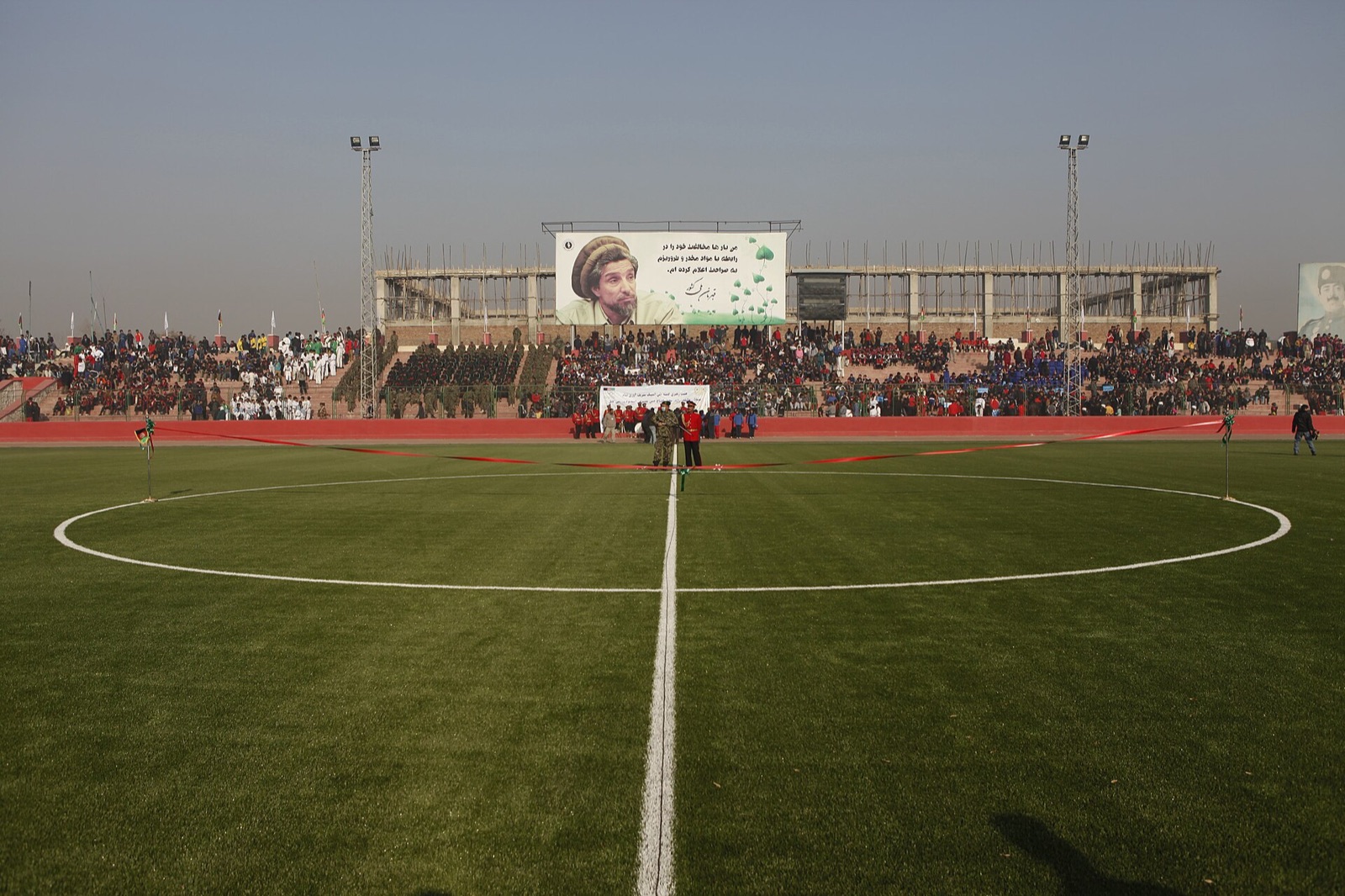
Photo: U.S. Federal Government, Public domain

Summary
- Free speech: about two-thirds of roughly 12,000 journalists have left the profession. Women journalists fell from 2,833 to 747. Nineteen provinces ban images of living beings.
- Democracy: the Economist index score fell from 2.85 (2020) to 0.25 (2025). There are no elections, no parliament and no legal parties. The Republic's own elections had shrunk from 8.1 million votes to 1.8 million valid votes.
- Youth: 63% of Afghans are under 25. 2.4 million girls are out of secondary school and 78% of young women are not in education, work or training.
- Sports: women's sport is banned at home. The exiled women's football team won FIFA recognition in April 2026. The men's cricket team reached a World Cup semi-final in 2024.
- What improved: far fewer journalists and voters are killed, because the insurgency that killed them now governs.
Key indicators
| Indicator | Around 2001 | Republic, 2019 to 2021 | Latest, 2024 to 2026 |
|---|---|---|---|
| RSF press freedom rank | Near the bottom | 122nd | 175th of 180 |
| Media outlets | One state radio station; TV banned | 547 | 328 a year after the takeover; more than half closed since |
| Women journalists | 0 | 2,833 | 747 |
| Journalists killed in a year | Not counted | 15 to 20 in 2018, the worst year | Two deaths in 2025 |
| EIU Democracy Index | Not rated | 2.85 | 0.25, last of 167 |
| National elections | None | Seven between 2004 and 2019 | None |
| Women in the lower house | No parliament | 27% quota | No parliament |
| Legal political parties | None | Dozens | None since August 2023 |
| Share of population under 25 | About the same | About 63% | 63% |
| Youth unemployment (ILO model) | No data | 16.0% (2021) | 16.8% (2025) |
| Girls in secondary school | Almost none | About 1 million | 0 |
| Olympic team | Suspended from the Olympics | 5 athletes, 1 woman (Tokyo) | 6 athletes, 3 women, named from exile (Paris) |
| Men's cricket | ICC affiliate | Full Member, Test nation | World Cup semi-finalist (T20, 2024) |
| Women's national teams | None | Football, cricket and others | Banned at home; football team recognised in exile |
The 2001 column rests on general historical knowledge, not on sources opened for this report.
Timeline, 2001 to 2026
| Date | Theme | Event |
|---|---|---|
| Sept 2026 | Sports | Men's cricket team opens the Asian Games in Japan with a win |
| Aug 2026 | Youth | UNESCO: 2.4 million girls barred from secondary school |
| Apr 2026 | Sports | FIFA lets the exiled women's team represent Afghanistan |
| Apr 2026 | Free speech | RSF ranks Afghanistan 175th of 180 |
| Dec 2025 | Free speech | Herat media told to stop showing people on screen |
| Sept to Oct 2025 | Free speech | Nationwide internet and phone blackout |
| Oct 2025 | Sports | Afghan Women United debut in Morocco |
| May 2025 | Sports | FIFA approves the refugee women's team; chess suspended |
| Feb 2025 | Democracy | EIU scores Afghanistan 0.25, last of 167 |
| Aug 2024 | Free speech | Vice and virtue law; MMA banned |
| July to Aug 2024 | Sports | Gender-balanced exile team at the Paris Olympics; Khudadadi wins Paralympic bronze for the Refugee Team |
| June 2024 | Sports | Men's cricket team reaches the T20 World Cup semi-final |
| Aug 2023 | Democracy | Political parties banned |
| Dec 2022 | Youth | Women banned from universities |
| Mar 2022 | Youth | Girls' secondary schools stay shut |
| Dec 2021 | Democracy | Election commissions dissolved |
| Sept 2021 | Free speech | "11 rules" for journalists; women's protests dispersed |
| 15 Aug 2021 | All | Kabul falls; the Republic collapses |
| Sept 2019 | Democracy | Presidential election with 1.8 million valid votes |
| 2019 | Sports | FIFA bans the football federation president for life over abuse of women players |
| Apr 2018 | Free speech | Nine journalists killed in a Kabul double bombing |
| June 2017 | Sports | ICC Full Member status |
| Jan 2016 | Free speech | Seven TOLO staff killed in a bus bombing |
| 2014 | Democracy | Disputed runoff ends in a unity government; national youth policy adopted |
| 2012 | Sports | Afghan Premier League founded; Nikpai's second Olympic bronze |
| 2009 | Free speech and democracy | Mass Media Law; fraud-marred presidential election |
| 2007 | Sports | Women's national football team founded |
| 2004 | Democracy | Constitution adopted; first presidential election; first Afghan women Olympians |
| Dec 2001 | Democracy | Bonn Agreement after the first Taliban regime falls |
Free speech
Afghanistan fell from 122nd to 175th of 180 in the RSF press freedom index, and most journalists left the profession. The Republic built the freest media in the region, but its journalists were killed in large numbers by the Taliban and ISKP.
Media landscape before and after
| Measure | Before 15 Aug 2021 | Latest under the Taliban |
|---|---|---|
| Media outlets | 547 | 328 after one year; 43% closed in the first three months (RSF via Kabul Now) |
| Journalists | About 12,000 | About two-thirds have left the profession or gone into exile |
| Women journalists | 2,833 | 747 in 2025; fewer than 100 in Kabul, down from about 700 (IPS) |
| RSF rank | 122nd (2021) | 175th of 180 (2026), score 19.51, up from 17.88 in 2025 (IANS) |
| RSF legal indicator | Mass Media Law 2009 barred censorship | 178th of 180 |
| Journalists in detention | Rare | Four held in 2026 (RSF) |
| Media directives | None of this kind | More than 20 since 2021 (AFJC) |
| Provinces banning images of living beings | 0 | 19 of 34 by June 2025; Herat told to comply in Dec 2025 |
RSF says remaining outlets work under heavy pressure and self-censorship. Audiences with internet access rely on exile outlets such as Amu TV, Afghanistan International, Hasht-e Subh, Rukhshana and Kabul Now. Journalists working for exile or foreign media are accused of espionage.
Violence against journalists under both systems
The Republic era was deadly for journalists. The killers were mostly insurgents, and the state rarely convicted anyone.
| Period | What was recorded | Source |
|---|---|---|
| January 2016 | Taliban suicide attack on a TOLO staff bus in Kabul killed seven employees | Widely reported; not re-checked for this report |
| 30 April 2018 | Double bombing in Kabul killed nine journalists | RSF via RFE/RL |
| 2018 | 15 journalists and media workers killed (RSF); 20 (AFJC). Deadliest country in the world for journalists that year (CPJ) | CPJ |
| 2020 | 8 journalists and media workers killed, most deliberately targeted | AFJC |
| 2021 | 9 media workers killed | AFJC |
| Aug 2021 to Aug 2022 | 245 media freedom violations in the Taliban's first year | AFJC |
| 2022 | 260 violations | AFJC |
| 2025 | 205 incidents, including 34 arrests, two deaths and three injuries | AFJC via State Media Monitor |
The pattern changed in kind. Under the Republic the main danger was assassination and bombing by insurgents. Under the Taliban the main danger is arrest, closure and censorship by the government itself. Killings of journalists have fallen because the group that carried out most of them now rules.
Timeline of Taliban restrictions on speech
| Date | Restriction |
|---|---|
| Dec 2025 | Herat media and YouTubers told to stop showing people on screen |
| 29 Sept to 1 Oct 2025 | First nationwide internet and phone blackout, about 48 hours |
| Sept 2025 | Fibre-optic internet banned province by province; books by women removed from universities |
| June 2025 | Image ban reaches 19 provinces (Kabul Now) |
| Mar 2025 | Image ban reaches 10 provinces; at least 25 TV stations later closed or converted to radio |
| Aug 2024 | Vice and virtue law: Article 17 bans images of living beings; women's voices not to be heard in public |
| Dec 2022 | FM broadcasts of Voice of America and Radio Azadi stopped |
| May 2022 | Women presenters ordered to cover their faces on air |
| Apr 2022 | TikTok and PUBG ban announced |
| Mar 2022 | Afghan channels barred from carrying BBC, VOA and Deutsche Welle programmes |
| Sept 2021 | "11 rules" for journalists, including no content "contrary to Islam" |
| Sept 2021 onward | Women's street protests broken up; organisers detained |
Entries before 2024 without a link are widely reported events and were not re-checked for this report.
Legal framework
The 2004 Constitution protected free expression in Article 34. The Mass Media Law of 2009 barred censorship, and an access to information law followed. The Taliban first promised to respect the media law, then replaced it in practice with directives and the 2024 vice and virtue law (Kabul Now).
Democracy
Afghanistan's Economist Democracy Index score fell from 2.85 in 2020 to 0.25 in 2024 and 2025, the lowest of 167 countries (Afghanistan International). The Republic's democracy was real but weakening: valid votes fell from 8.1 million in 2004 to 1.8 million in 2019.
Elections under the Republic
| Election | Votes | Notes |
|---|---|---|
| 2004 presidential | 8,128,940 cast | First direct presidential vote; Karzai won in one round |
| 2005 parliamentary and provincial | About 6.4 million | First elected parliament since 1969; 68 lower-house seats reserved for women |
| 2009 presidential | 5,918,741 cast | Large-scale ballot stuffing; Karzai's share cut below 50% after audit; Abdullah quit the runoff |
| 2010 parliamentary | About 4.2 million valid | Roughly 1.3 million ballots thrown out for fraud |
| 2014 presidential, first round | 7,018,049 cast | Women were 36% of voters |
| 2014 presidential, runoff | 8,109,493 cast | Disputed; full audit; settled by a US-brokered unity government, not a published result |
| 2018 parliamentary | About 4 million | Three years late; Kabul results took months; Ghazni did not vote |
| 2019 presidential | 1,823,948 valid | About 19% of 9.67 million registered; Ghani 50.64%; both Ghani and Abdullah held inaugurations in March 2020 |
Presidential figures are those used in The State of Afghanistan 2026. Parliamentary figures are approximate and were not re-checked for this report. District council elections required by the constitution were never held.
What worked and what did not
- Worked: a constitution with equal rights, a 27% women's quota in the lower house, a parliament that rejected ministers and budgets, dozens of registered parties and thousands of civil society groups.
- Did not work: every presidential election after 2004 ended in a fraud dispute. The presidency was highly centralised. Former warlords held office. The single non-transferable vote system kept parties weak. Taliban violence closed polling centres and suppressed turnout, especially for rural women.
- Public opinion: in the Asia Foundation's 2019 survey, about 65% said they were satisfied with democracy, 36% said the country was heading in the right direction and 13% expressed sympathy for the Taliban. These figures are from the published survey and were not re-checked here.
Democracy indices
| Index | Late Republic | Taliban era |
|---|---|---|
| EIU Democracy Index (0 to 10) | 2.85 (2020) | 0.32 (2021), 0.25 (2024 and 2025); rank 167 of 167 |
| EIU political participation | Low but above zero | 0.00, the only country at zero (Afghanistan International) |
| EIU electoral process, civil liberties, functioning of government | Above zero | 0.00 on all three; political culture 1.25 (Amu TV) |
| Freedom House political rights (0 to 40) | 13 in the last Republic-era report (approximate) | 1 (Freedom in the World 2024) |
| Freedom House total (0 to 100) | 27, "Not Free" (approximate) | 10 in the first Taliban-era report, then single digits (approximate) |
Even before 2021 the Republic was rated an authoritarian regime by the EIU and "Not Free" by Freedom House. The fall was from a weak, violent electoral system to no political rights at all.
The Islamic Emirate
- Structure: Supreme Leader Haibatullah Akhundzada rules by decree from Kandahar. Freedom House says his decrees and ministers' orders have replaced legislation, and there is no constitution.
- Elections: electoral commissions were dissolved in late 2021. There is no provision for elections.
- Parties: political parties were banned in August 2023. Freedom House calls Afghanistan an effective one-party state.
- Cabinet: the caretaker cabinet named in September 2021 was all male and overwhelmingly Pashtun Taliban figures. No woman has held a senior post.
- Opposition: the National Resistance Front and Afghanistan Freedom Front carry out small attacks. Republic-era politicians operate from exile. UNAMA recorded 218 killings of former officials and soldiers between August 2021 and June 2023 despite a declared amnesty.
- Internal divisions: reporting describes tension between the Kandahar leadership and Kabul-based ministers over girls' schooling and the 2025 internet ban. These accounts rest on unnamed sources.
One continuity: the Taliban hold consultative gatherings of clerics and elders, and some local dispute resolution continues through traditional councils. None of it is elected or includes women.
Youth
Sixty-three percent of Afghans are under 25, so most of the country has no adult memory of the first Taliban regime (UNFPA via Kabul Now). The Republic gave this generation schools, universities and media but too few jobs. The Taliban era has removed the schooling for girls and added few jobs for anyone.
Before and after
| Measure | Republic era | Taliban era |
|---|---|---|
| Share of population under 25 | About 63% | 63% (UNFPA, 2026) |
| Share under 15 | Over 40% | Over 43% (Hasht-e Subh) |
| Population | About 39 million (2020) | 48.6 million UN estimate for 2026; Taliban authorities say 37.2 million |
| Youth unemployment, ages 15 to 24 (ILO model) | 10.0% (2010); 16.0% (2021) | 17.5% (2022), 17.2% (2024), 16.8% (2025) (World Bank via FRED) |
| Urban youth unemployment | Not comparable | Above 30% (ILO, 2023) |
| Young women not in education, work or training | High, but falling as girls stayed in school | 78%, about four times the male rate (UN Women, 2024) |
| Girls in secondary school | About 1 million (2021) | 0; 2.4 million excluded (UNESCO, Aug 2026) |
| Women at university | More than 100,000 | 0 since Dec 2022 |
| Legal minimum marriage age for girls | 16 under the civil code | Not enforced; a UN committee has condemned a Taliban regulation as legalising child marriage |
The two unemployment series disagree. The ILO model shows about 17%, while other estimates put it above 30%. The model counts only people actively seeking work, so it understates joblessness where most young women are barred from working.
The Republic-era generation
- Education: enrolment grew about tenfold between 2001 and 2021, and universities expanded from a handful to more than 150 public and private institutions. The university count is approximate.
- Voice: young Afghans staffed the new TV stations, ran civil society groups and made up much of the electorate. A national youth policy was adopted in 2014.
- Problems: jobs never kept pace with graduates. Roughly 200,000 Afghans applied for asylum in Europe in 2015 alone (approximate). Armed groups and pro-government militias recruited minors. Drug use was widespread. The abuse of boys known as bacha bazi persisted, including among security forces.
Under the Taliban
- Girls and young women: barred from school after grade 6, from university, from most jobs and from parks and gyms. Rights groups report rising depression and forced and child marriage.
- Child marriage: one public hospital in northern Afghanistan recorded 42 underage births in the first five months of 2026, and families describe promising daughters in marriage to clear debts (Guardian summary).
- Young men: face rules on beards, hairstyles, clothing and music under the 2024 vice and virtue law. Many go to Iran or Pakistan for work and are then deported.
- Brain drain: about 124,000 people were airlifted out in August 2021 (approximate), many of them educated professionals. University staff, journalists and athletes followed.
- Religious schooling: the authorities have expanded madrassas and revised curricula toward religious subjects. No independent count exists.
- Returnees: more than 6 million people have returned from Iran and Pakistan since September 2023, many of them young people born abroad.
- Workarounds: girls study through online courses, radio lessons and secret classes. The 2025 internet shutdown showed how fragile these are.
What improved for youth: boys and young men in former war zones are no longer conscripted into or killed by a daily war. Conflict recruitment of minors has fallen with the fighting.
Sports
Women's sport has been banned inside Afghanistan since 2021, while the men's cricket team has had its best results ever under Taliban rule. Both facts trace back to the Republic years, when the teams and federations were built.
Before and after
| Area | Republic era | Taliban era |
|---|---|---|
| Women's sport | National teams in football (from 2007), cricket (25 contracts in 2020), cycling, taekwondo, boxing and more | Banned; a Taliban official said in 2021 women could not play sports where they are "exposed" (SBS) |
| Women's football | National team played internationally | Players in exile in Albania, Australia, Portugal, the UK and the US; recognised by FIFA as Afghanistan's team on 29 April 2026 (HRW) |
| Women's cricket | Contracts awarded in 2020 | Players mostly in Australia; the ICC funds an Afghan Women's XI but has not recognised it (Star Community) |
| Men's cricket | ICC Full Member 2017; first Test 2018 | Four wins at the 2023 World Cup; T20 World Cup semi-final 2024; Asian Games campaign 2026 |
| Olympic medals | Two bronzes, Rohullah Nikpai, taekwondo, 2008 and 2012 | None for Afghanistan; Zakia Khudadadi won Paralympic bronze for the Refugee Team in 2024 |
| Combat and mind sports | MMA and chess federations active | MMA banned in August 2024; chess suspended in May 2025 |
| Women's gyms and parks | Open in cities | Closed to women since November 2022 |
Olympic participation
| Games | Athletes | Women | Note |
|---|---|---|---|
| Athens 2004 | 5 | 2 | First Afghan women at an Olympics |
| Beijing 2008 | 4 | 1 | Nikpai wins Afghanistan's first Olympic medal |
| London 2012 | 6 | 1 | Nikpai's second bronze |
| Rio 2016 | 3 | 1 | |
| Tokyo 2020 (held 2021) | 5 | 1 | Weeks before the fall of Kabul |
| Paris 2024 | 6 | 3 | Team named by the exiled Olympic committee; the IOC accredited no Taliban officials |
Athlete counts are from Olympic records and were not re-checked for this report.
Men's cricket milestones
| Year | Milestone |
|---|---|
| 2026 | Opens Asian Games in Japan with a 48-run win over the hosts; 11th Shpageeza league season played (Gulf News) |
| 2025 | Champions Trophy debut, including a win over England |
| 2024 | T20 World Cup semi-final after beating Australia and New Zealand |
| 2023 | Four World Cup wins, including England and Pakistan |
| 2022 | Asian Games silver, after silvers in 2010 and 2014 (New Kerala) |
| 2018 | First Test match, against India |
| 2017 | ICC Full Member status |
| 2015 | First ODI World Cup |
| 2010 | First T20 World Cup |
| 2001 | ICC affiliate membership |
The contradiction is plain. ICC rules expect Full Members to field a women's side. Afghanistan does not, and keeps its status. Australia and England have declined bilateral series against the men's team while still playing them at ICC events (Dawn). The men's team still plays its "home" internationals abroad, mainly in the UAE and India.
Football
- Republic era: the Afghan Premier League started in 2012 and the men won the South Asian championship in 2013.
- Abuse scandal: in 2018 players on the women's team accused federation president Keramuddin Karim of sexual abuse. FIFA banned him for life in 2019. This happened under the Republic and showed how weak athlete protection was.
- After 2021: FIFA helped evacuate more than 160 at-risk players and officials. It approved a refugee team, Afghan Women United, in May 2025. The team debuted in Morocco in October 2025 against Tunisia, Chad and Libya (FIFA).
- April 2026: the FIFA Council changed its rules so the exiled players can represent Afghanistan in official matches without approval from the Kabul federation. Support covers nearly 90 players (Reuters via NST).
What continued or improved
Men's cricket, football, futsal, taekwondo and buzkashi all continue with government backing. Stadiums are no longer bombing targets. The cost is that half the population is excluded, male athletes face dress and grooming rules, and federations lost donor funding.
Assessment by theme
| Theme | Gained under the Republic | Lost under the Taliban | Unchanged or improved |
|---|---|---|---|
| Free speech | Hundreds of outlets, about 12,000 journalists, a law barring censorship, open criticism of government | Most journalists and women journalists, live political debate, images of people in 19 provinces, foreign broadcasts, reliable internet | Far fewer journalists killed; some private outlets such as TOLO still broadcast under censorship; exile media reach audiences online |
| Democracy | A constitution, seven national elections, a parliament with a women's quota, parties and civil society | All of it: no constitution, elections, parliament or legal parties | The Republic was already rated authoritarian and its elections were shrinking and disputed; election-day violence has ended because there are no elections |
| Youth | Schooling for both sexes, universities, media and civic life | Girls' schooling past grade 6, women's university and most work, personal freedoms for young men | Youth unemployment by the ILO measure is about where it was in 2021; boys are no longer drawn into a daily war |
| Sports | Olympic medals, a Test cricket nation, women's national teams, domestic leagues | All women's sport at home, MMA and chess, donor funding | Men's cricket has improved; women's football survives in exile with FIFA recognition |
Caveats
- How this was made: this report was compiled from web searches and background knowledge, not from a full multi-source research run. It is shallower than The State of Afghanistan 2026.
- Unverified figures: numbers marked approximate or "not re-checked" were not verified against a source. That covers parliamentary election totals, Freedom House totals, the Asia Foundation survey, Olympic athlete counts, the 2015 asylum figure and the 2021 airlift figure.
- Missing data: no year-by-year series was found for RSF rank before 2019, journalists killed per year, internet users, asylum applications or youth literacy by sex.
- Conflicting figures: media outlet counts differ between RSF, AFJC and IFJ. Youth unemployment ranges from about 17% (ILO model) to above 30% (other estimates). Population estimates range from 37.2 million (Taliban) to 48.6 million (UN).
- Sources: several figures reach this report through news coverage of RSF, AFJC, EIU, UNFPA and FIFA releases, not the original documents.
Read More
Freedom & MediaDemocracy & GovernanceYouthSportsThe State of Afghanistan 2026