Home › Afghanistan › Education
Education
From 1 million students to 10 million, and a new education divide.
Education transformed Afghanistan over two decades, opening opportunities for millions of children, especially girls. Since 2021 that progress has been reversed, with girls banned from secondary school and women from universities.
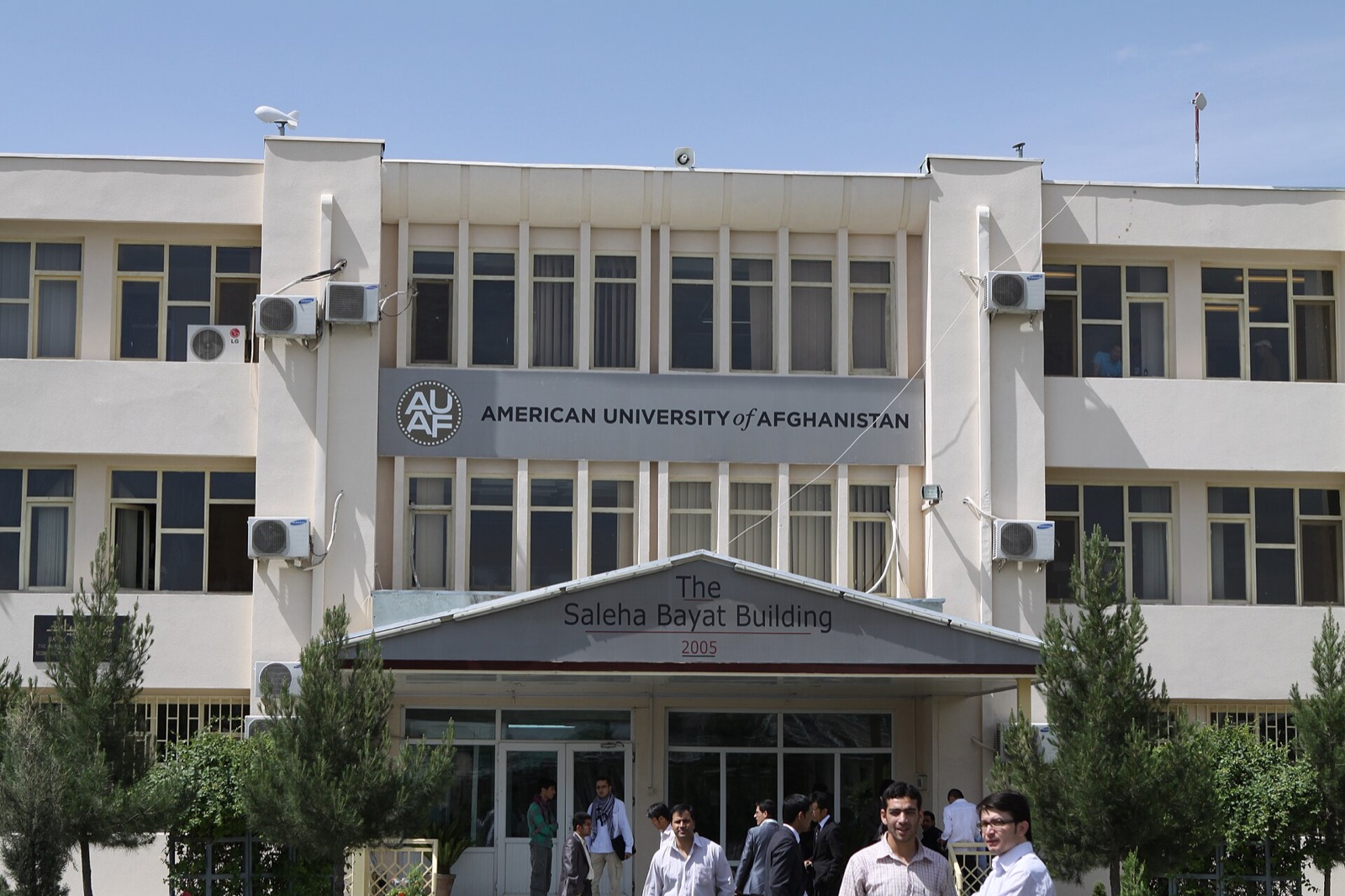
Photo: USAID Afghanistan, Public domain
Key Facts
- ~1 million → ~10 millionTotal students2001 to 2018
- Almost zero → ~2.5 millionGirls in primary school2001 to 2018
- ~5,000 → 100,000+ → 0Female university students2001, 2021 and today
- 2.4 millionGirls barred from secondary schoolUNESCO, August 2026
Total students
~1 million → ~10 million
2001 to 2018
Before/after
| Metric | 2001 | 2018–2021 (Republic) | 2022–2026 (Taliban) |
|---|---|---|---|
| Total enrollment | ~1 million | ~10 million (2018) | Primary down to 5.7m (2022) from 6.8m (2019) |
| Girls' primary enrollment | ~3% of girls received any primary education | >80% of primary-age girls enrolled; 2.5m girls in primary (2018) | Allowed up to grade 6; 1.1 million fewer children (boys and girls) in primary school by 2024 |
| Girls in secondary | ~0 | ~1 million (2021) | Banned since 23 March 2022 |
| Girls barred from secondary (cumulative) | — | — | 1.4m (Aug 2024) → 2.2m (2025) → 2.4m (Aug 2026) |
| Women in university | ~5,000 | >100,000 | 0 (banned 20 Dec 2022) |
| Women in medical/nursing/midwifery institutes | — | Thousands enrolled | Banned Dec 2024 |
| Share of school-age girls out of school | Nearly all | Substantial; 3.5m children out of school pre-collapse, ~85% girls according to some estimates | ~80% of school-age girls and young women (UNESCO, 2024) |
Girls excluded from secondary education (UNESCO/UNICEF counts)
- Aug 2024
- 2025
- Aug 2026
- 2030 proj
Key points
- Scale of the Republic gain. UNESCO says the number of students rose tenfold between 2001 and 2021. Female higher-education enrollment rose from about 5,000 to more than 100,000.2223 The gains were real, but there were caveats. Before the collapse, 3.5 million children were still out of school.24 Quality was weak, and a SIGAR audit raised concerns about "ghost schools" and inflated enrollment data. Rural girls, especially in the insecure south, lagged far behind.
- What the Taliban changed. Girls past grade 6 are banned (March 2022). Women are banned from university (December 2022) and from medical institutes (December 2024). Women may not teach boys.21 In September 2025, books written by women were removed from university teaching.18 UNESCO projects a shortfall of more than 11,000 qualified female teachers by 2030.21 It also estimates that the higher-education ban alone will cost up to US$9.6 billion in lost potential by 2066, roughly two-thirds of current GDP.25
- Madrassas and curriculum. The Taliban have prioritised religious schooling. They are expanding a network of state-run madrassas, revising curricula toward religious subjects, and removing subjects such as civic education and arts. Independent counts of the madrassa expansion aren't available. Treat the Taliban's claims of thousands of new madrassas as unverified.
- Partial mitigation. UNICEF reached 445,000 children through community-based education (64% girls).26 UNESCO-trained facilitators teach literacy to 57,000 young people in more than 2,600 villages. These programmes are under constant pressure from the authorities.22
- Boys are also affected. Overall primary enrollment fell, quality declined after experienced female teachers were removed, and poverty pushes boys into child labour.
AFM's Position
Every girl and every boy has the right to a classroom. No exceptions.
Women and girls must regain access to secondary and higher education, employment and public life, with meaningful representation in political institutions.
Research & References
Small numbers beside a figure link to its source. Figures from Taliban ministries are reported as claims and cannot be independently verified.