Home › Afghanistan › Democracy & Governance
Democracy & Governance
From flawed elections to no elections at all.
The Republic held four presidential elections, each more contested than the last. Since 2021 the constitution has been suspended and parliament, the election commissions and the human rights commission have been abolished.
Key Facts
- 8.1 million → 1.8 millionVotes cast in presidential elections2004 to 2019
- NoneElected institutions todayParliament and both election commissions abolished
- 0Women in cabinetNo women in cabinet or local administration (UN Women)
- 1States recognising the Taliban governmentRussia, since 3 July 2025
Votes cast in presidential elections
8.1 million → 1.8 million
2004 to 2019
Elections under the Republic
| Election | Votes cast | Turnout / notes |
|---|---|---|
| 2004 presidential | 8,128,940 | 83.7% of 9.72m registered;48 Karzai wins |
| 2009 presidential | 5,918,741 | ~48% of registered; massive fraud; Karzai's 54.6% revised below 50%; Abdullah withdrew from runoff |
| 2014 presidential, round 1 | 7,018,049 | 6.6m valid; 36% of voters women |
| 2014 runoff | 8,109,493 | Disputed; no final audited result published; resolved by US-brokered unity government |
| 2019 presidential | 1,824,401 valid (prelim.); 1,823,948 (final) | ~19% of 9.67m registered; lowest of any Afghan election; Ghani 50.64%8 |
| Parliamentary (2005, 2010, 2018) | — | Repeated fraud allegations; 2018 vote delayed three years, Kabul results took months |
The declining turnout is a key point in the honest assessment. Democracy was real in form, but by 2019 fewer than 2 million Afghans had a vote counted, and each election was more contested than the last.
Institutions abolished by the Taliban
- 2004 Constitution (suspended; the Taliban rule by Supreme Leader decree and their interpretation of Sharia)
- National Assembly (parliament)
- Independent Election Commission and Electoral Complaints Commission (dissolved Dec 2021)
- Afghanistan Independent Human Rights Commission (May 2022)
- Ministry of Women's Affairs (Sept 2021)
- Ministries of Peace and Parliamentary Affairs
- Independent bar association absorbed into the Ministry of Justice; women lawyers and judges excluded
Democracy
Afghanistan's Economist Democracy Index score fell from 2.85 in 2020 to 0.25 in 2024 and 2025, the lowest of 167 countries (Afghanistan International). The Republic's democracy was real but weakening: valid votes fell from 8.1 million in 2004 to 1.8 million in 2019.
Elections under the Republic
| Election | Votes | Notes |
|---|---|---|
| 2004 presidential | 8,128,940 cast | First direct presidential vote; Karzai won in one round |
| 2005 parliamentary and provincial | About 6.4 million | First elected parliament since 1969; 68 lower-house seats reserved for women |
| 2009 presidential | 5,918,741 cast | Large-scale ballot stuffing; Karzai's share cut below 50% after audit; Abdullah quit the runoff |
| 2010 parliamentary | About 4.2 million valid | Roughly 1.3 million ballots thrown out for fraud |
| 2014 presidential, first round | 7,018,049 cast | Women were 36% of voters |
| 2014 presidential, runoff | 8,109,493 cast | Disputed; full audit; settled by a US-brokered unity government, not a published result |
| 2018 parliamentary | About 4 million | Three years late; Kabul results took months; Ghazni did not vote |
| 2019 presidential | 1,823,948 valid | About 19% of 9.67 million registered; Ghani 50.64%; both Ghani and Abdullah held inaugurations in March 2020 |
Presidential figures are those used in The State of Afghanistan 2026. Parliamentary figures are approximate and were not re-checked for this report. District council elections required by the constitution were never held.
What worked and what did not
- Worked: a constitution with equal rights, a 27% women's quota in the lower house, a parliament that rejected ministers and budgets, dozens of registered parties and thousands of civil society groups.
- Did not work: every presidential election after 2004 ended in a fraud dispute. The presidency was highly centralised. Former warlords held office. The single non-transferable vote system kept parties weak. Taliban violence closed polling centres and suppressed turnout, especially for rural women.
- Public opinion: in the Asia Foundation's 2019 survey, about 65% said they were satisfied with democracy, 36% said the country was heading in the right direction and 13% expressed sympathy for the Taliban. These figures are from the published survey and were not re-checked here.
Democracy indices
| Index | Late Republic | Taliban era |
|---|---|---|
| EIU Democracy Index (0 to 10) | 2.85 (2020) | 0.32 (2021), 0.25 (2024 and 2025); rank 167 of 167 |
| EIU political participation | Low but above zero | 0.00, the only country at zero (Afghanistan International) |
| EIU electoral process, civil liberties, functioning of government | Above zero | 0.00 on all three; political culture 1.25 (Amu TV) |
| Freedom House political rights (0 to 40) | 13 in the last Republic-era report (approximate) | 1 (Freedom in the World 2024) |
| Freedom House total (0 to 100) | 27, "Not Free" (approximate) | 10 in the first Taliban-era report, then single digits (approximate) |
Even before 2021 the Republic was rated an authoritarian regime by the EIU and "Not Free" by Freedom House. The fall was from a weak, violent electoral system to no political rights at all.
The Islamic Emirate
- Structure: Supreme Leader Haibatullah Akhundzada rules by decree from Kandahar. Freedom House says his decrees and ministers' orders have replaced legislation, and there is no constitution.
- Elections: electoral commissions were dissolved in late 2021. There is no provision for elections.
- Parties: political parties were banned in August 2023. Freedom House calls Afghanistan an effective one-party state.
- Cabinet: the caretaker cabinet named in September 2021 was all male and overwhelmingly Pashtun Taliban figures. No woman has held a senior post.
- Opposition: the National Resistance Front and Afghanistan Freedom Front carry out small attacks. Republic-era politicians operate from exile. UNAMA recorded 218 killings of former officials and soldiers between August 2021 and June 2023 despite a declared amnesty.
- Internal divisions: reporting describes tension between the Kandahar leadership and Kabul-based ministers over girls' schooling and the 2025 internet ban. These accounts rest on unnamed sources.
One continuity: the Taliban hold consultative gatherings of clerics and elders, and some local dispute resolution continues through traditional councils. None of it is elected or includes women.
International Standing
| Item | Status |
|---|---|
| Formal recognition | Russia only (3 July 2025), after removing the Taliban from its terror list in April 20256 |
| Ambassadors accepted | China (Dec 2023, first), UAE, Uzbekistan, Pakistan and others; ≥17 countries maintain embassies in Kabul687 |
| UN seat | Not granted to the Taliban; UN Credentials Committee has deferred the decision |
| Sanctions | UN 1988 sanctions regime on Taliban leaders remains; travel-ban exemptions granted case by case |
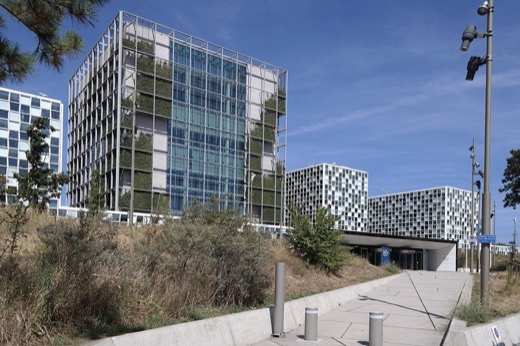
| ICC | Arrest warrants for Akhundzada and Haqqani (8 July 2025)12 |
| Relations with Pakistan | Severely deteriorated: TTP (Pakistani Taliban) dispute, mass deportations, border closures, open hostilities since Oct 2025 |
| Relations with Iran | Water disputes (Helmand), mass deportations (Iran faces 60% cut in refugee funding)83 |
| Central Asia/China/Russia | Growing trade, mining and transit engagement; Uzbekistan calls recognition "inevitable"6 |
AFM's Position
Representative and accountable government, free from corruption and discrimination, built on consultation, the rule of law and meaningful political participation.
Afghanistan must be governed by institutions that answer to the people, not to force.
Research & References
Small numbers beside a figure link to its source. Figures from Taliban ministries are reported as claims and cannot be independently verified.